Allocate stock by access and sensitivity
Separate a small working supply from the reserve. Frequently needed labels or paper packs belong in a readily accessible place; larger replenishment quantities can sit farther away. Store materials according to their packaging instructions. Paper and adhesive products in particular should not move into an unsuitable location simply because a narrow gap is available there.
Measure the cupboard's actual interior before buying containers. Hinges and shelf supports can reduce usable width. Choose containers that can be removed without moving several others first. Tall stacks use volume but make lower packs difficult to reach. Smaller stacks can create more usable space in practice because items no longer have to be repeatedly placed beside their intended position.
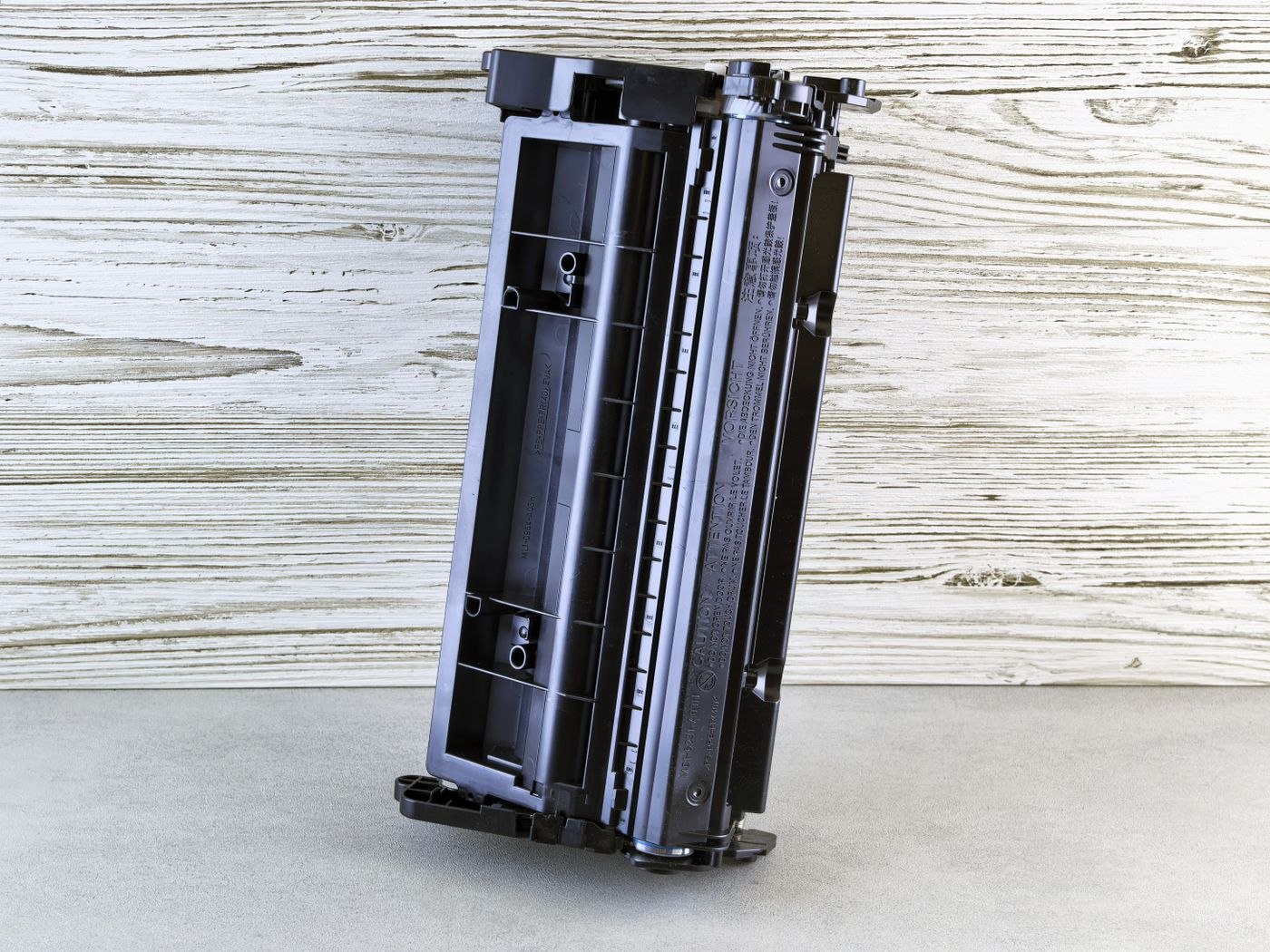
Keep product identification readable and separate different variants. Similar label formats or printer cartridges are not interchangeable by default. If original packaging is replaced by shared containers, retain the details needed to identify the contents. Do not mix opened supplies when their exact specification will become unclear afterwards. Any stated expiry date must remain visible too. A compact arrangement is only useful if users can still select the right material confidently.
Limit quantities and consolidate leftovers
Set an understandable maximum quantity for frequently used items based on ordinary consumption and replenishment. Large packs are not an advantage when they occupy valuable space for long periods or cease to fit the equipment in use. Before ordering, check whether suitable stock already exists elsewhere. Small scattered reserves are easily overlooked and can lead to unnecessary repeat purchases.
Bring matching leftovers together without simply mixing materials of uncertain identity. Position older suitable packs so they are used first. Remove empty outer cartons promptly once they no longer serve a sorting purpose. An empty box can create the impression that stock remains while occupying space needed for actual supplies.
When replenishing, check whether the arrangement still reflects usage. If an item repeatedly ends up outside its compartment, access may be awkward or the compartment too small. Change the arrangement instead of merely making its label larger. Empty storage space is a reserve for handling and visibility, not a reason to order more materials speculatively. Keeping one part of a shelf free can make checking deliveries and rotating existing stock much easier than filling every available centimetre.