Follow one item through the process
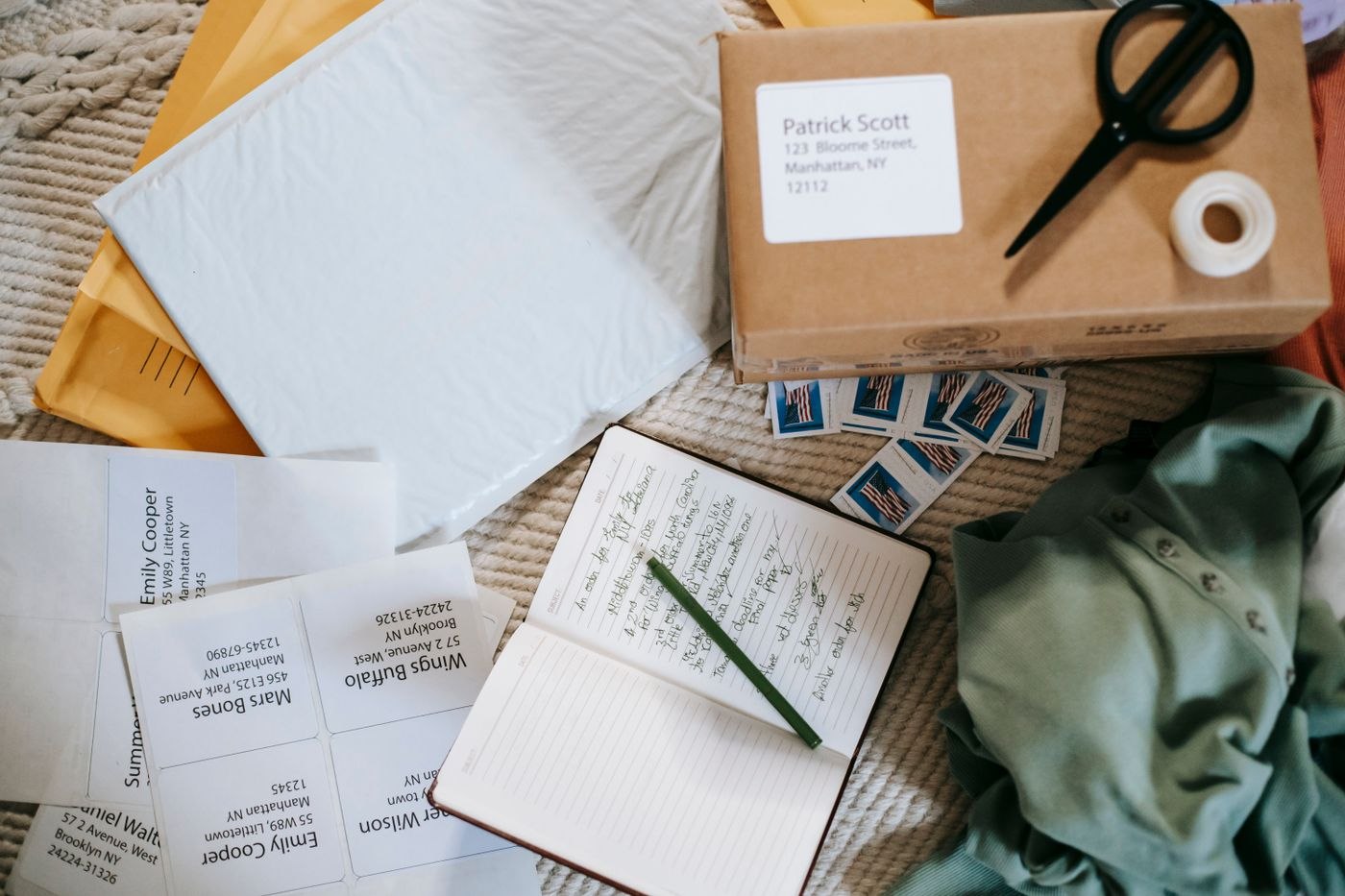
Take a representative letter and parcel through each step: checking the contents, packing, addressing, arranging postage and preparing for collection. This reveals missing scissors, an inconvenient printer location or finished items being mixed back into unchecked incoming mail. Separate incoming post from items ready to leave, even if the distinction consists of only two clearly labelled trays.
Choose a location where an open parcel will not block a passage. The surface should fit ordinary packages rather than the largest exceptional item you can imagine. An occasionally cleared table may be sufficient for rare oversized shipments. Do not leave private or confidential correspondence permanently on a generally accessible packing surface; the mailing station does not replace the filing location or responsible recipient.
Arrange supplies in working order
Keep frequently used envelopes and carton sizes close to hand without storing the entire reserve on the work surface. Give cutting tools, tape and labels fixed positions. Store cutting tools so nobody reaching into a supply box can encounter an exposed blade. A small container for clean packing scraps prevents label backings and paper strips from obstructing the next item being prepared.
If weighing or measuring is routine, provide a stable place for the appropriate equipment. Check the relevant carrier's conditions and prices whenever a shipment depends on them. Old handwritten price lists pinned to a wall may no longer be current. A link to the current source and a short note identifying who decides unusual shipping cases will often be more useful.
Finished also means handed over
Define when an item is ready to leave. A sealed carton without a checked address or required shipping label does not yet belong in the collection area. Verify the recipient, sender and number of related pieces before handover. When reusing packaging, remove or cover previous shipping markings so two different destinations are not visible at the same time.
Where several people participate, leave a brief handover note for unusual shipments: what is waiting, which service is intended and when it needs to be dropped off. Store required posting records in their designated location rather than loosely beside the scales. Check the collection area at the end of the day. A parcel left behind will then be noticed before someone assumes the following morning that it is already on its way. This closing check matters particularly when collection times or responsible staff vary across the week.