List devices rather than counting plugs
Record the laptop, phone, headphones and other equipment alongside their intended charging accessories. Check the manufacturers' power requirements: identical connector shapes do not make every charger equally suitable for every task. Label proprietary chargers and keep their device associations clear. A universal unit simplifies the desk only if it actually supports the functions and power needed by your particular combination.
Consider which devices genuinely need charging simultaneously. A phone charged elsewhere overnight may need only an occasional desk connection. A laptop used throughout a long working day may need a permanently accessible supply. Base the arrangement on that real routine rather than the maximum number of devices that could theoretically be plugged in at once.
Include use while charging
Position devices so that connectors are not pulled sideways. If you pick up the phone during a conversation, its cable must allow that movement. A very short lead keeps the surface tidy but can tie the device to an unusable position. An unnecessarily long one creates loops around the working area. Try the ordinary movement with the proposed charging position before fixing the cable route.
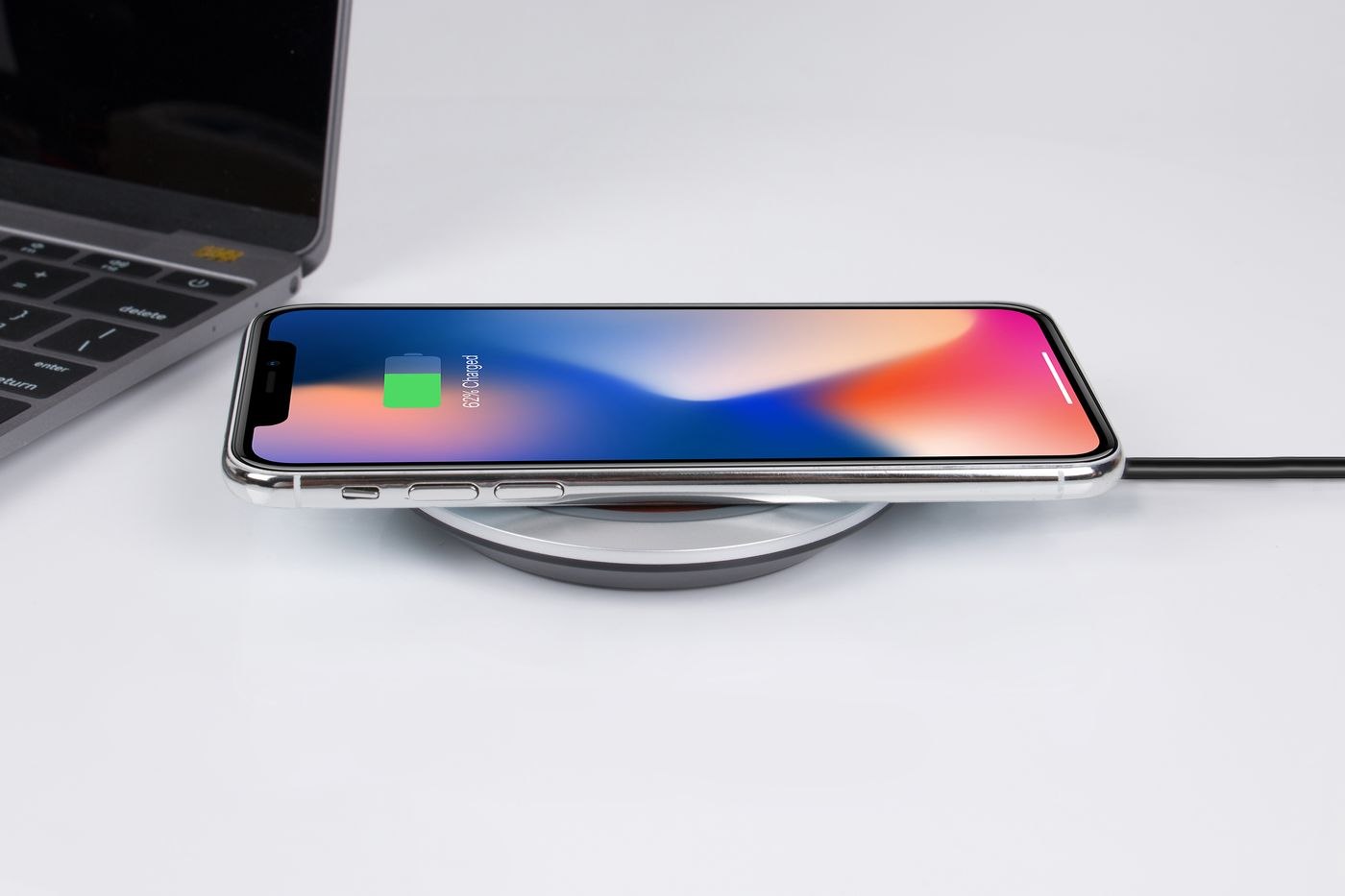
For wireless charging, follow the compatibility and positioning guidance for the particular charger, device and case. Check the charging indicator after placing the device down. A neatly arranged position is useful only if charging actually starts. Do not also use it as a tray for coins, keys or other objects excluded by the equipment instructions.
Keep surfaces clear and connections accessible
Choose a stable, dry location where devices and power supplies can be used according to their instructions. Do not cover them with papers or fabric, and leave designated ventilation areas clear. For unusual heat, visible damage or other abnormalities, follow the manufacturer's guidance and have the accessory assessed rather than hiding it inside a closed box.
A charging area at the edge of the desk can leave room for writing. Still check whether someone passing could catch a lead or pull a device down. At shared desks, small factual labels can identify the intended connection and the cables that remain there. Avoid personal shorthand that will become meaningless after a device or user changes.
Test arrival and departure as well
Rehearse arriving in the morning, picking up devices during the day and taking them away afterwards. A travel cable trapped in the permanent bundle creates avoidable searching before the next visit away from the office. Keep a designated mobile set separate if that suits your work and check its contents before departure.
After a week, judge the arrangement by actual difficulties. Did a misplaced device fail to charge? Did two people need the same connection? Was one lead repeatedly missing? Change the part responsible. Additional ports or a larger charging station help only when they answer an observed need rather than adding more equipment to organise.