Compare the complete height
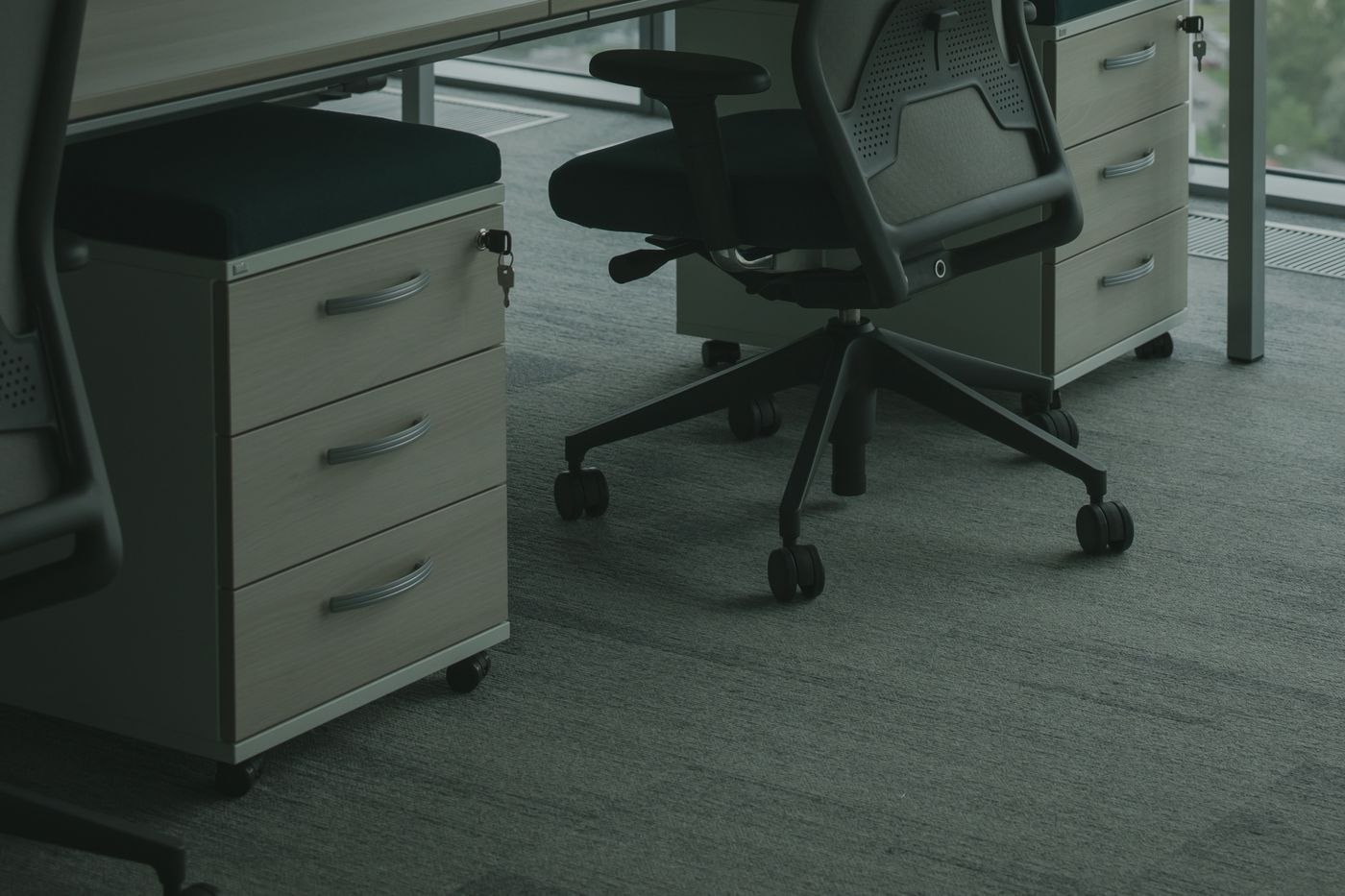
Measure the clear height beneath the desk at the intended position. Include any apron, drawer or cable tray. Compare it with the pedestal's complete height, including wheels and any projecting handle. The cabinet body's dimensions alone are insufficient. With an adjustable desk, use the lowest position you actually work at.
Draw the pedestal from above too. Its depth must neither press against rear connectors nor project into the chair's movement area. If it will stand beside the desk, check the remaining passage. An extra surface at desktop height can be convenient, but it is not a reason to narrow an essential route.
Plan for open drawers
Measure the depth with drawers extended and establish where you will sit or stand when opening them. A drawer containing current working papers should be accessible without an awkward sequence of rolling back. With a deep bottom drawer, consider whether you can see its contents from above or will have to reach in without seeing the object you need.
Follow the manufacturer's instructions for safe opening and loading. Check any drawer interlock or locking mechanism rather than assuming it works like a similar model. Do not use an extended drawer as a seat or additional work surface. A pedestal does not become a safe desk extension simply because its top happens to be the same height.
Let contents determine the interior
Allocate the intended items to individual drawers: stationery, small electronics, paper and folders. Measure larger objects such as a headset or document wallet. A shallow upper drawer may suit small items but cannot hold upright binders. Additional organisers are worthwhile only when their compartments match the actual objects.
Choose a location for the key and any spare. A lockable pedestal helps organise access only when it is clear who may open it and where the key belongs. Judge its suitability for confidential material against your organisation's requirements; a basic furniture lock is not a general security guarantee.
Check internal dimensions with real samples
Bring or accurately measure a typical binder, document wallet and the largest small device involved. External pedestal dimensions omit wall thickness, runners and guide components. Check that objects can lie or stand in their intended compartment without striking an edge when it closes. For hanging files, explicitly confirm the compatible support arrangement.
Decide which items are removed together as well. A small removable organiser may suit stationery, while fixed divisions can obstruct larger equipment. Do not buy inserts merely because they are offered with the furniture. Draw the compartments required by your objects and compare available layouts afterwards.
Preserve the ability to move it
Test whether the loaded pedestal can move in its intended position. Carpet edges, closely spaced desk legs and cables above it may make removal difficult. If it mainly moves for cleaning, keep that route available. Recheck legroom after filling it, because a convenient empty pedestal can gradually migrate closer to the chair in daily use. Avoid storing loose objects behind it that will be dragged out whenever the cabinet moves.