Start with the words people search for
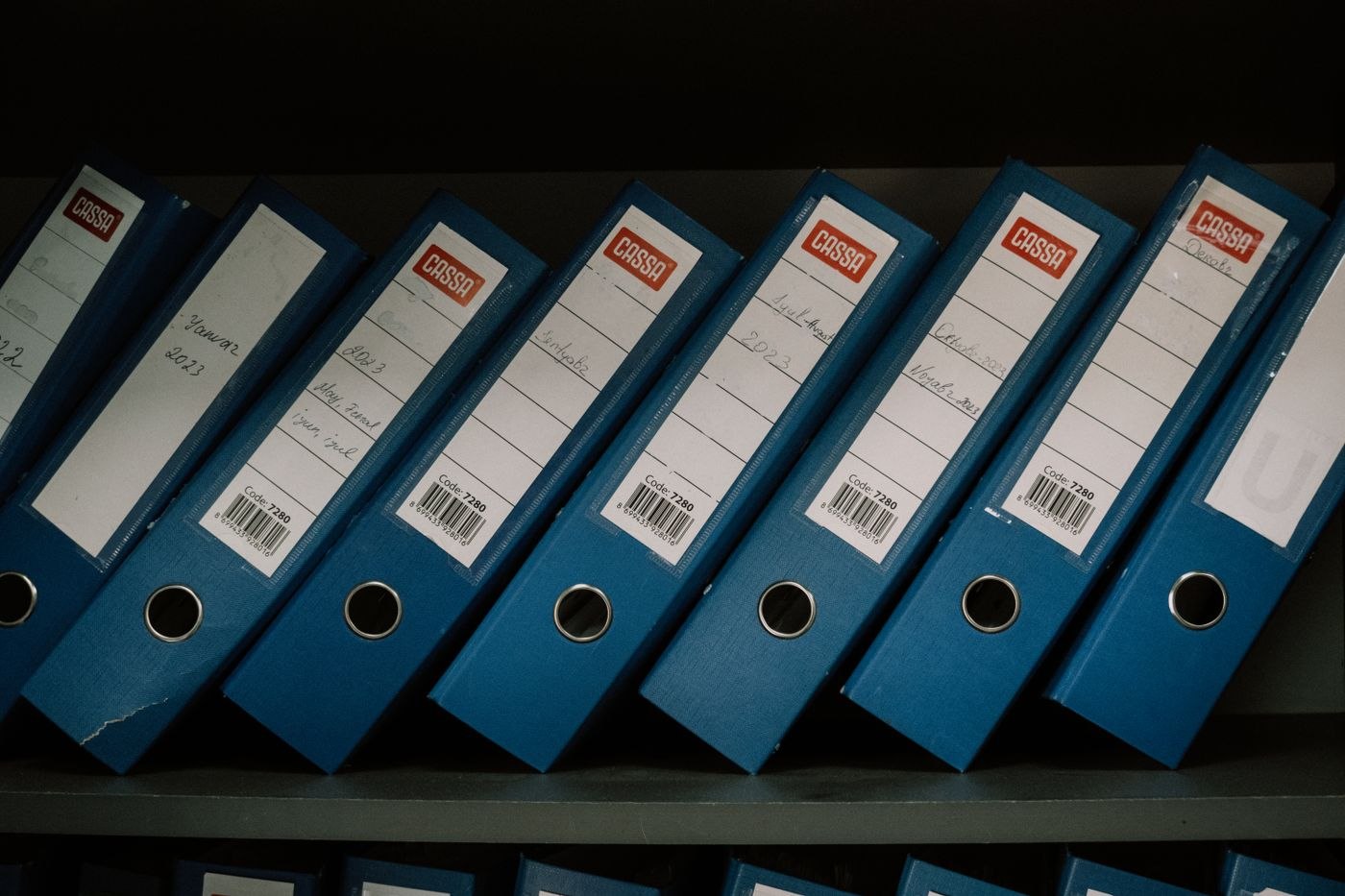
Consider the term someone would use if they had not filed the material themselves. A binder marked Miscellaneous requires opening every time. Supplier quotations 2026 describes a much narrower collection. In shared storage, use the same terminology as your digital folders so that people do not have to translate between two different filing systems.
Write several example labels on ordinary paper first. Put long and short names together and decide which information should appear first. A project name may matter more than the year; annual financial files may benefit from the opposite order. Leave room for an addition instead of filling every available millimetre with tiny type. A consistent order makes neighbouring labels easier to scan without forcing every title to have the same length.
Check the shelf, not just the screen
Attach a temporary sample to a binder and read it from the normal viewing distance. Try the bottom shelf as well, where the angle and lighting may be less favourable. Use clear contrast and avoid a narrow decorative typeface. Colour can identify a group, but should not carry the entire meaning. The written label still needs to make sense to someone unfamiliar with your colour system.
On drawers and opaque boxes, place the label on the face visible when the storage is closed. A second label on the lid can help once the box has been removed. Check whether the adhesive suits the surface or whether a replaceable insert would work better. Frequently changing contents favour a reusable label holder over a sticker that is difficult to remove cleanly.
Sacrifice a test sheet before the full run
Match the label dimensions, printer requirements and document template carefully. Print the layout on plain paper first and hold it against the label sheet. Pay particular attention to the last row, where a small alignment error becomes more obvious. Use labels approved for the particular printer and follow the instructions about feeding partially used sheets again.
Keep the editable template in a known shared location and record the matching label product number. Update the wording as soon as the contents change. A beautifully printed but outdated sign can send someone confidently to the wrong place; a temporary handwritten label with accurate information is more useful while the permanent replacement is prepared.