Choose tasks with different working patterns
Look through an ordinary working day and identify transitions between activities. A brief review, a phone conversation and concentrated writing make different demands on papers and input devices. Consider which task would genuinely allow an easy change of position. A general intention to do every activity standing overlooks those differences.
Start with one manageable change. Before adjusting the desk, arrange the required materials so they remain accessible in the new position. Having to reorganise several paper piles, a drink and a calculator first makes the change unnecessarily complicated. Reduce the items laid out at once to those needed for the current task.
Set up both positions completely
Check the display, keyboard and mouse while seated and standing. Desktop height alone does not describe the whole workstation. A monitor stand or mount may need a separate adjustment. Record existing scale readings or saved positions so you can recover the arrangement without starting again each time.
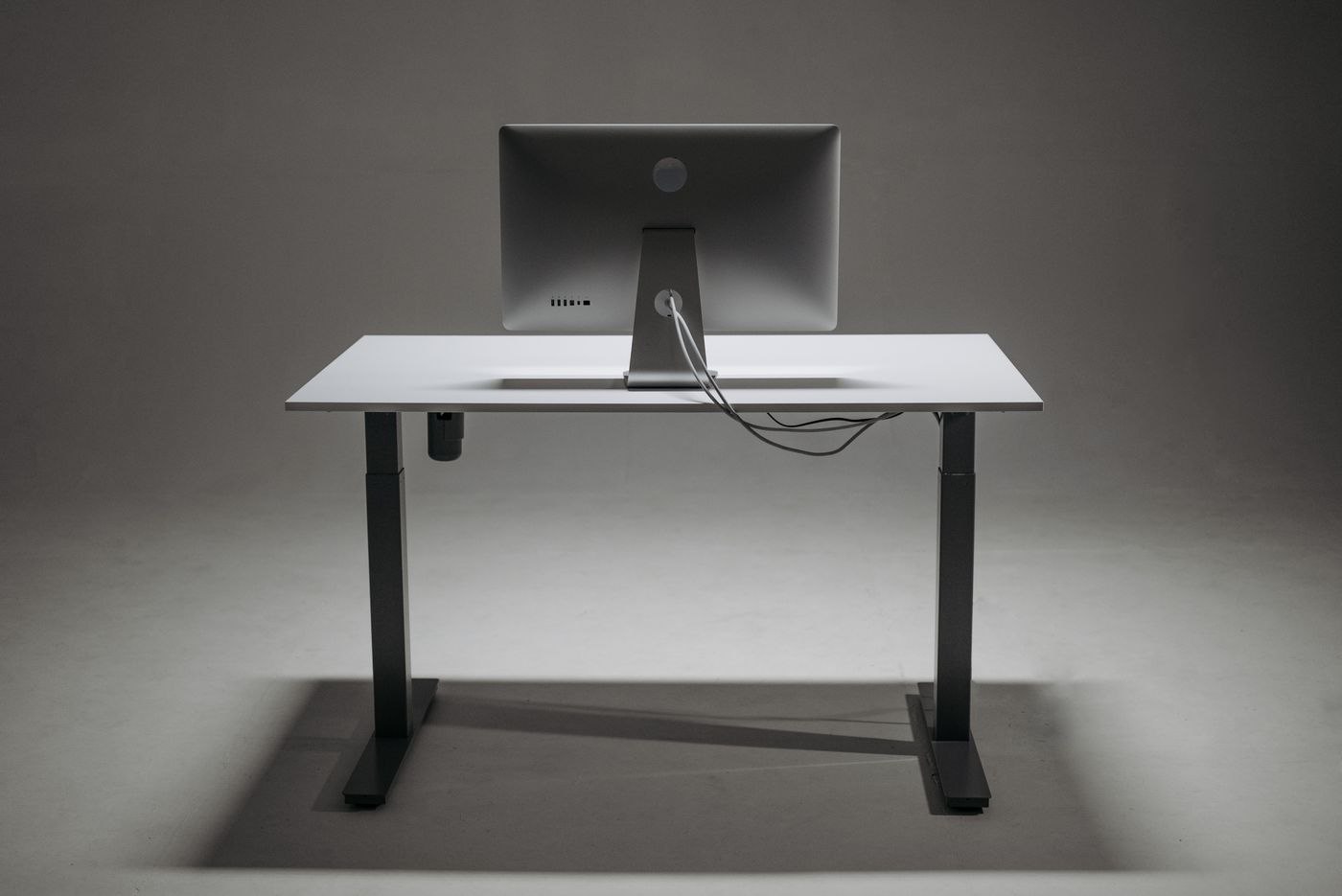
Check cables and the area around the moving top. A bag on the floor or an open pedestal can enter the movement path even if adjustment worked well earlier. Watch the travel area while operating the desk and follow its manufacturer's instructions. A stored height does not replace this check.
Keep changing position optional
Observe how the selected task works in each position. If you repeatedly reach for papers or move closer to the display, alter the arrangement. A change of position should not make the actual work unnecessarily awkward. Handwriting may require a different distribution of materials from a brief conversation.
Do not treat standing as an obligation to tolerate discomfort. A general furnishing guide cannot establish an appropriate duration for every person. Individual limitations or persistent discomfort call for personal professional advice. For workspace organisation, begin with the aim of making several suitable positions available without extensive rearrangement. After several days, identify which changes work in ordinary use and which existed only in the initial plan. Retain the useful ones rather than adding more adjustments simply to follow a schedule.