Match the folders to the drawer
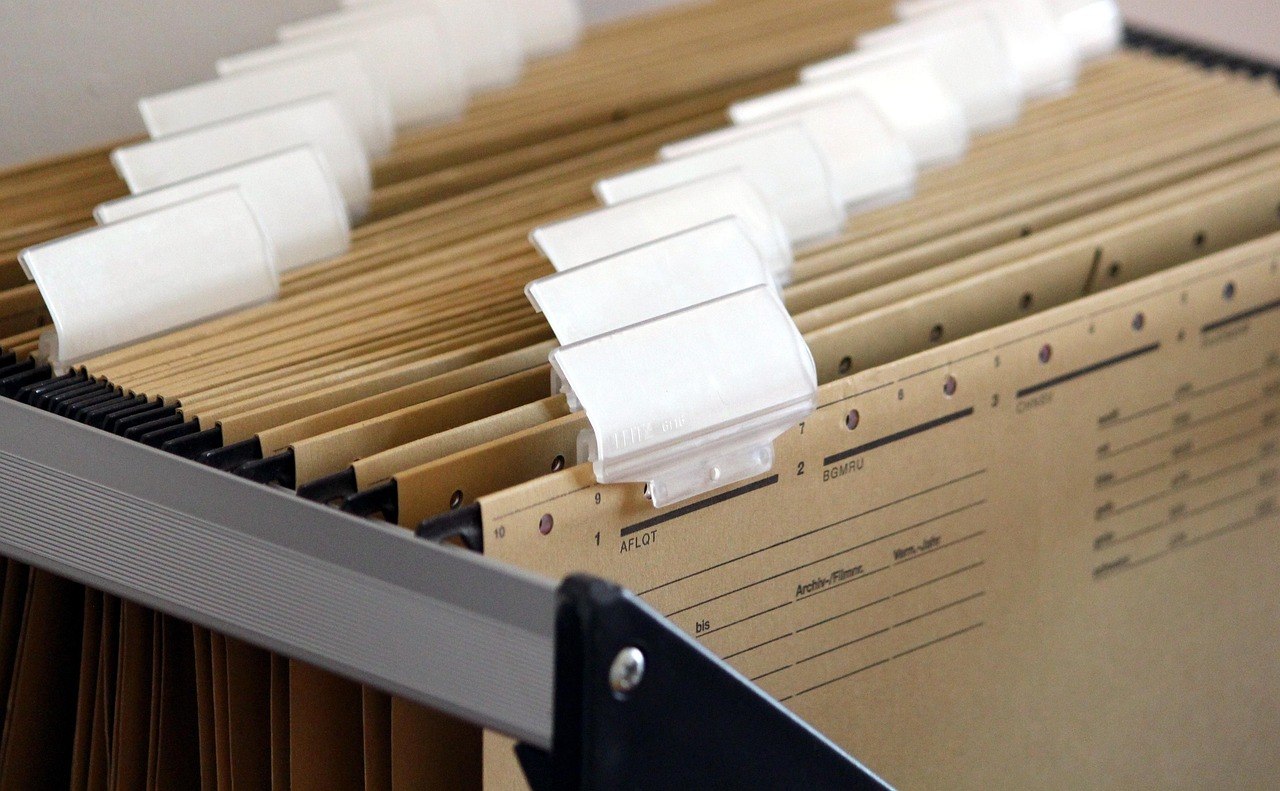
Check the existing drawer's support system, internal width and usable depth against the proposed files. Two products being described as office storage does not establish that they fit together. Include the height of the label tabs so that the drawer can close completely.
Try the arrangement with the drawer open and a normal stack of documents in place. Can you read the rear tabs and remove a folder without shifting the papers in front of it? The clear area before the cabinet is part of the layout. A pedestal behind an office chair may be harder to use than its position suggests on a floor plan.
Keep each case recognisable
Give each file a short description that helps retrieval: a project name, client reference or another consistently used identifier. Different words for the same case make searching harder. When related digital documents exist, the same reference can connect both locations without putting every filename on the tab.
Decide which papers belong in the file. A register for active enquiries should not simultaneously become storage for blank forms. A straightforward sequence may be enough inside each folder. If a case contains separate strands of work, an inner folder may be clearer than one increasingly thick, undivided stack.
A tab identifies the contents but does not automatically communicate progress. Keep outstanding actions in your task system. If a status card inside the folder is useful, record the next action and the date of the last update. An unexplained colour scheme is easily misunderstood by someone covering for an absent colleague.
Leave space for movement
Avoid packing the drawer so tightly that removing one file pulls its neighbours along with it. Periodically identify completed cases that can move to their intended longer-term location. The active collection should primarily contain work that still needs handling.
If one case needs splitting, retain its original reference and add understandable part names. That preserves the relationship between folders. Additional files should make information easier to find rather than merely hiding an overfilled section. The useful test is whether a needed document can be removed and later returned to one unambiguous place.