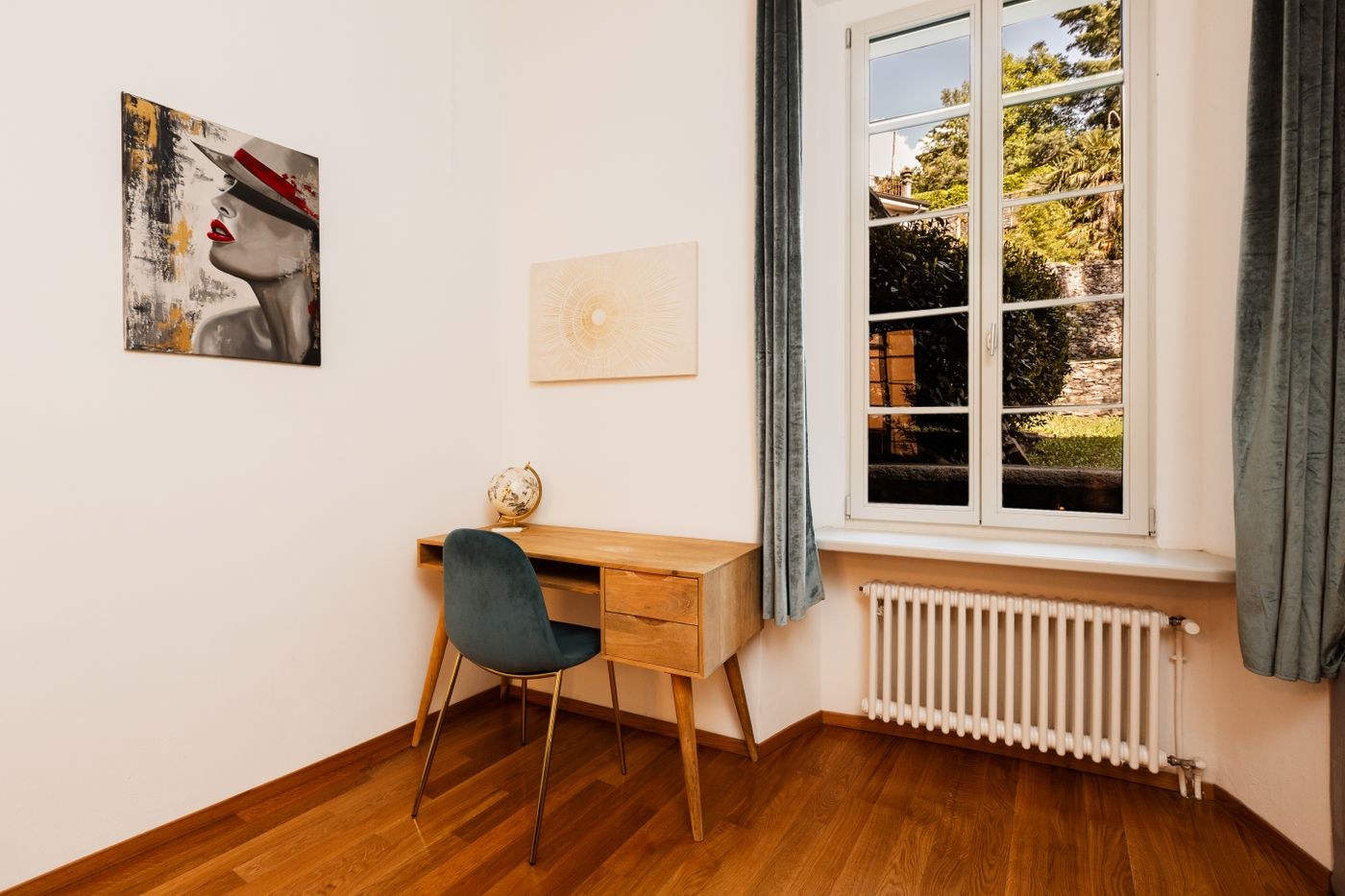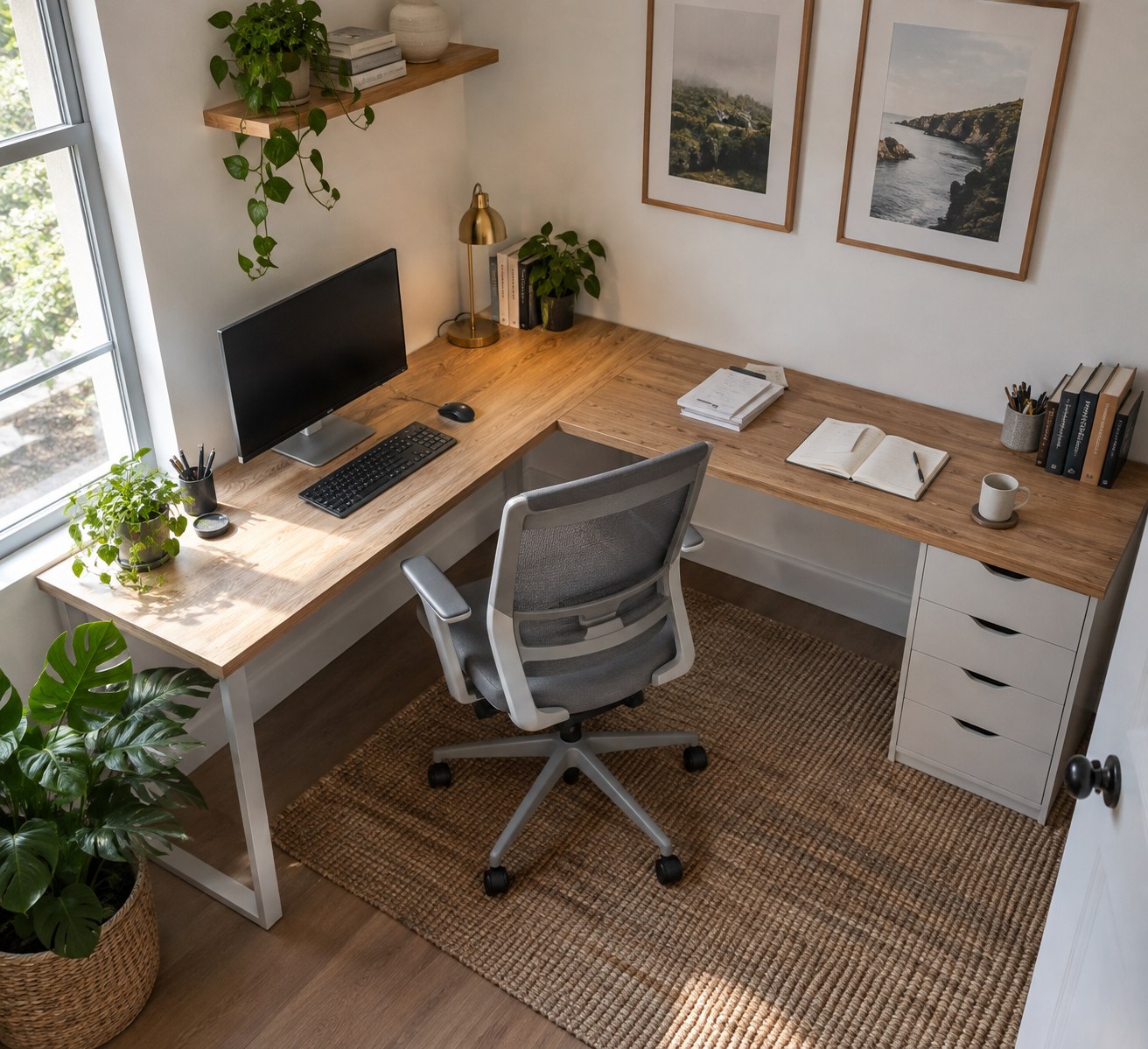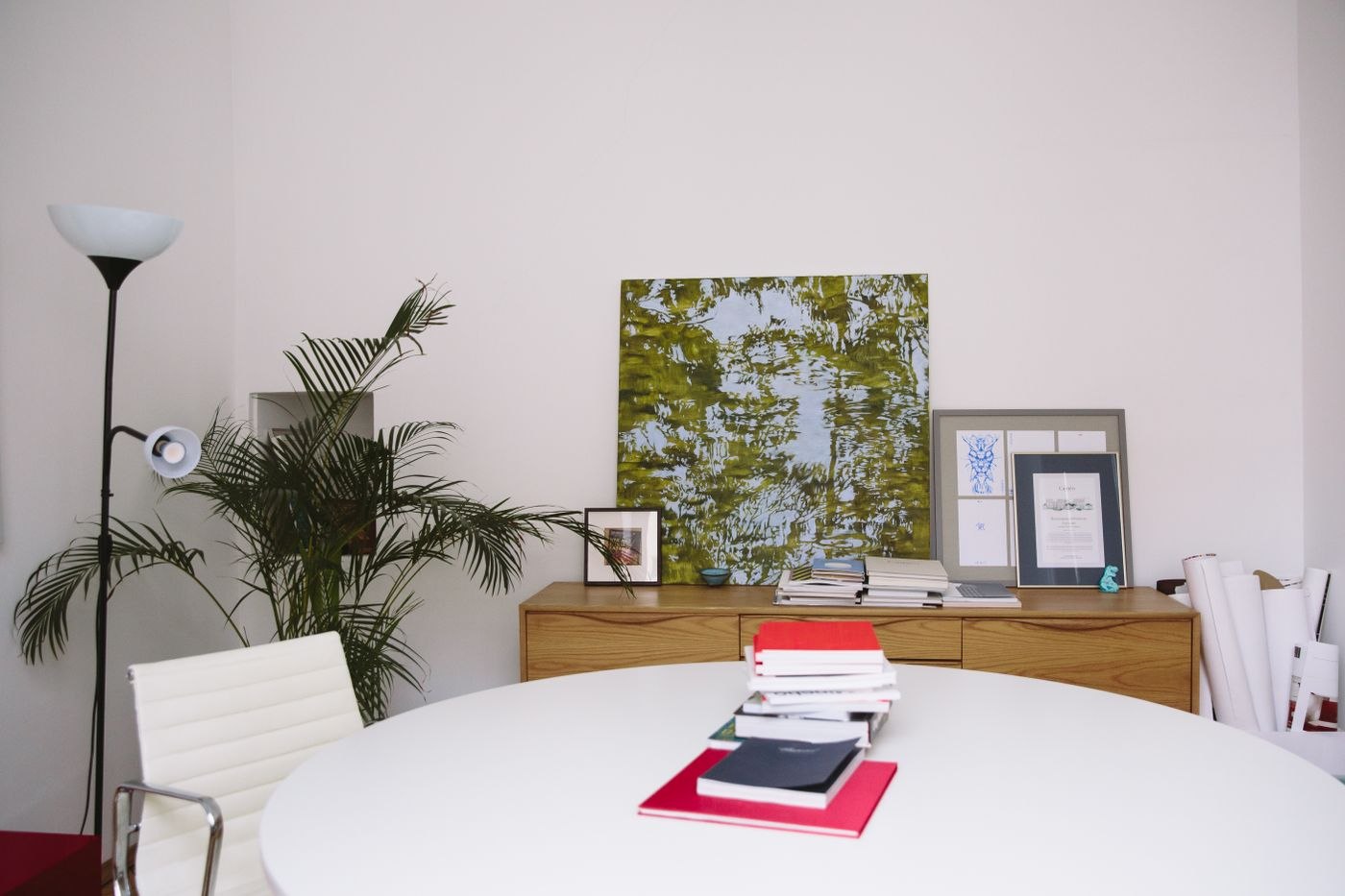
Describe the normal conversation
Decide how the corner will be used. Two people reviewing a draft need a different arrangement from four people with open laptops. Record the usual number of participants, duration and materials. Avoid designing around a rare exception if it obstructs the room every day. Another location may suit occasional larger groups better.
Put the materials for a typical discussion on an existing surface. Check whether both participants can see them without repeatedly turning the whole pile. For screen-based work, viewing direction matters more than a decorative table shape. A small display to one side behaves differently from a laptop in the middle; test the actual view.
Check access with people seated
Arrange the chairs so one person can stand without making everyone else move. Assess the space with occupied seats and an open door. The empty area around an unused corner table says little about its performance. Bags and coats also need somewhere other than the floor in the passage.
If the corner shares a room with permanent desks, consider those users. A conversation immediately behind an occupied workstation may cause repeated interruptions. Agree which brief discussions belong there and when another room should be used. Adding a table does not turn an open working area into an enclosed meeting room.
Limit the equipment
Keep only regularly needed items available, such as paper, pens and an appropriate connection option. Return cables to a defined location after the conversation. A loose collection of adapters, remotes and old notes can quickly make the small surface unusable. Give shared equipment a clear storage position.
Finish each meeting by resetting the area. Participants remove personal documents, return materials and leave a clear place for the next group. After several real conversations, review whether the corner serves its intended function. If extra chairs are always being brought from other rooms, either the assumed group size or the chosen use does not reflect daily work. Revise that assumption before adding more furniture to an already limited area.