Sort objects by retrieval frequency
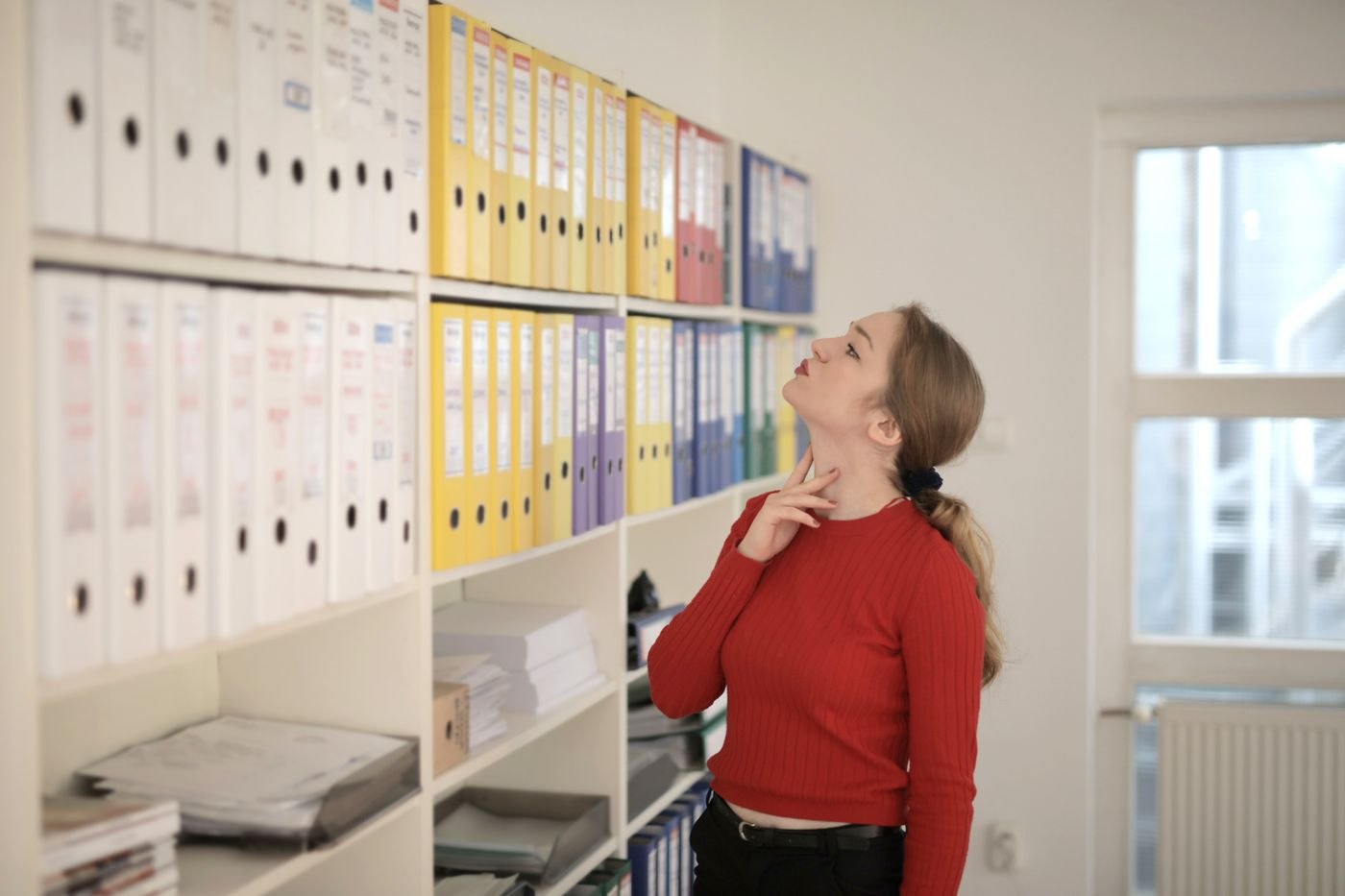
Divide the intended contents into frequently, occasionally and rarely needed items. Keep everyday folders and equipment in an area you can reach safely without special aids. A symmetrical arrangement is of little use if the most frequently consulted binder sits at the top. Test access with an object of similar size and weight.
Consider shape as well. A broad box needs two hands and clear space in front. Removing one book differs from lifting a full binder. A high shelf may suit light items used rarely, but it is not automatically the right location for heavy reserve supplies. Follow the furniture's load and assembly specifications.
Test removal and replacement
Place a typical folder in the compartment and take it out several times. Is there enough clearance above for your hand? Can you read the label before moving anything? A compartment matching the object's exact height may be too tight in use. Include grip openings, lids and projecting catches when sizing storage boxes.
Avoid placing a second row behind frequently used materials. It disappears from view and introduces additional movements whenever something is needed. If you already have deep shelving, suitable containers can make the contents accessible as individual sets. Size them so they remain manageable when loaded rather than forcing you to pull several categories out together.
Keep the approach clear
An ideal shelf height is of little help if an office chair or printer blocks access. Mark the area where you stand to retrieve something. In a shared room, check whether that position obstructs someone else's desk. Frequently used items should have a direct approach wherever possible.
Use an appropriate access aid according to its instructions for high areas; a swivelling office chair is not a substitute for safe access equipment. If everyday tasks would repeatedly require climbing, reorganise the contents. Label fronts clearly and review the arrangement after several weeks. Actual retrieval frequency may differ from the original expectation. Moving one frequently used folder to a more suitable level can be more effective than buying another cabinet.